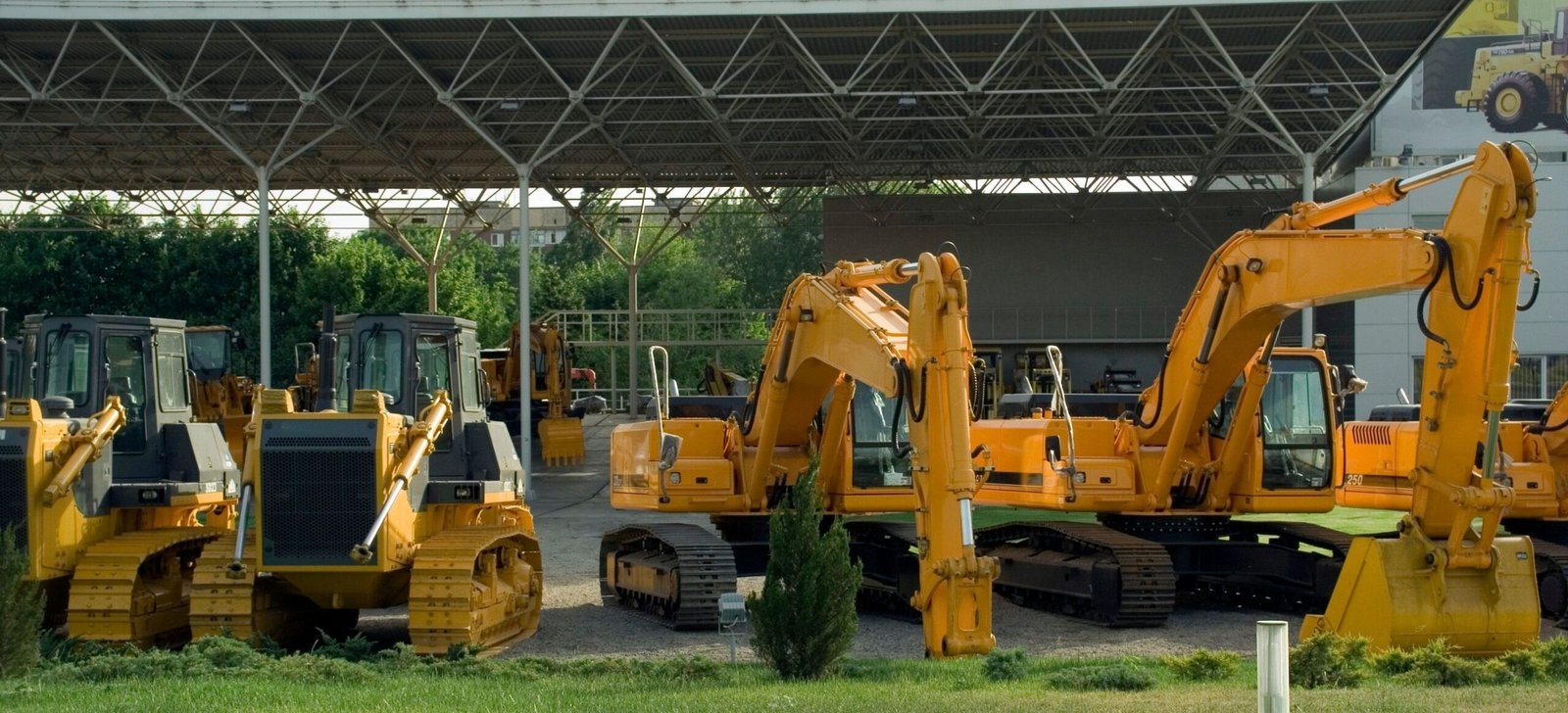
An integrated system for managing heavy equipment and fleet, allowing for the efficient monitoring of vehicles, their operational status, maintenance, movement, and costs.
The system helps to organize fleet operations and improve operational efficiency, reducing downtime and costs, while providing accurate reports to support decision-making.
- The actual reality
Isolated data means inaccurate decisions
The fragmentation of asset data makes it difficult to access the correct information.
* Absence of a unified source of information
Excesses in oil consumption
Supply quantities do not correspond to operating hours and consumption rates.
* Uncalculated oil costs
Missing in the tires
Inaccurate balances and unregistered tire movement on the vehicles.
* Waste in operational costs
Waste of fuel
Uncertified mobilization
And the balances are inconsistent.
* Unexplained differences
Unmanaged end dates
Documents, permits, insurance, and periodic inspections may be terminated without notice or prior action.
* Violations and unplanned downtime
Lack of operational vision
Late manual reports do not reflect reality
Mechanisms and locations immediately.
* Decisions based on late data
Waste of fuel
Uncertified mobilization
And the balances are inconsistent.
* Unexplained differences
Excesses in oil consumption
Supply quantities do not correspond to operating hours and consumption rates.
* Uncalculated oil costs
Missing in the tires
Inaccurate balances and irregular tire movement Registered on the mechanisms.
* Waste in operational costs
Lack of operational vision
Late manual reports do not reflect reality Mechanisms and locations immediately.
* Decisions based on late data
Unmanaged end dates
Documents, permits, insurance, and periodic inspections may be terminated without notice or prior action.
* Violations and unplanned downtime
Isolated data means inaccurate decisions
The fragmentation of asset data makes it difficult to access the correct information.
* Absence of a unified source of information
Heavy equipment and machinery companies face challenges in managing spare parts and distributing them between warehouses and sites, leading to shortages, stockpiling, and difficulty in controlling inventory.
They also face difficulties in monitoring the consumption of lubricants, tires, and diesel, and high costs due to weak oversight and the absence of a unified system for managing warehouses, disposal, and consumption.
The system consists of four main parts:
Tyres
Vehicle oils
Diesel
Equipment and spare parts
– 01 Equipment and spare parts
Every movement within the warehouse Or the workshop is registered and available For tracking
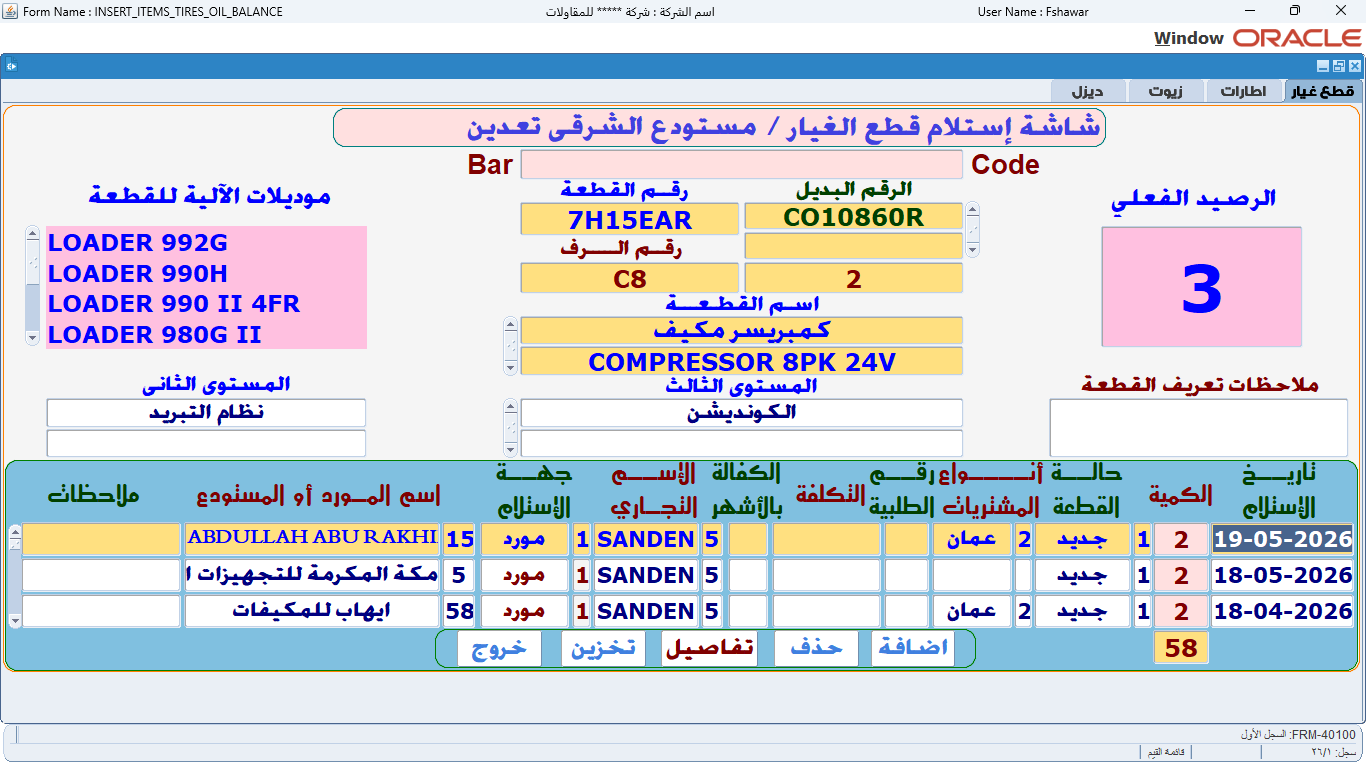
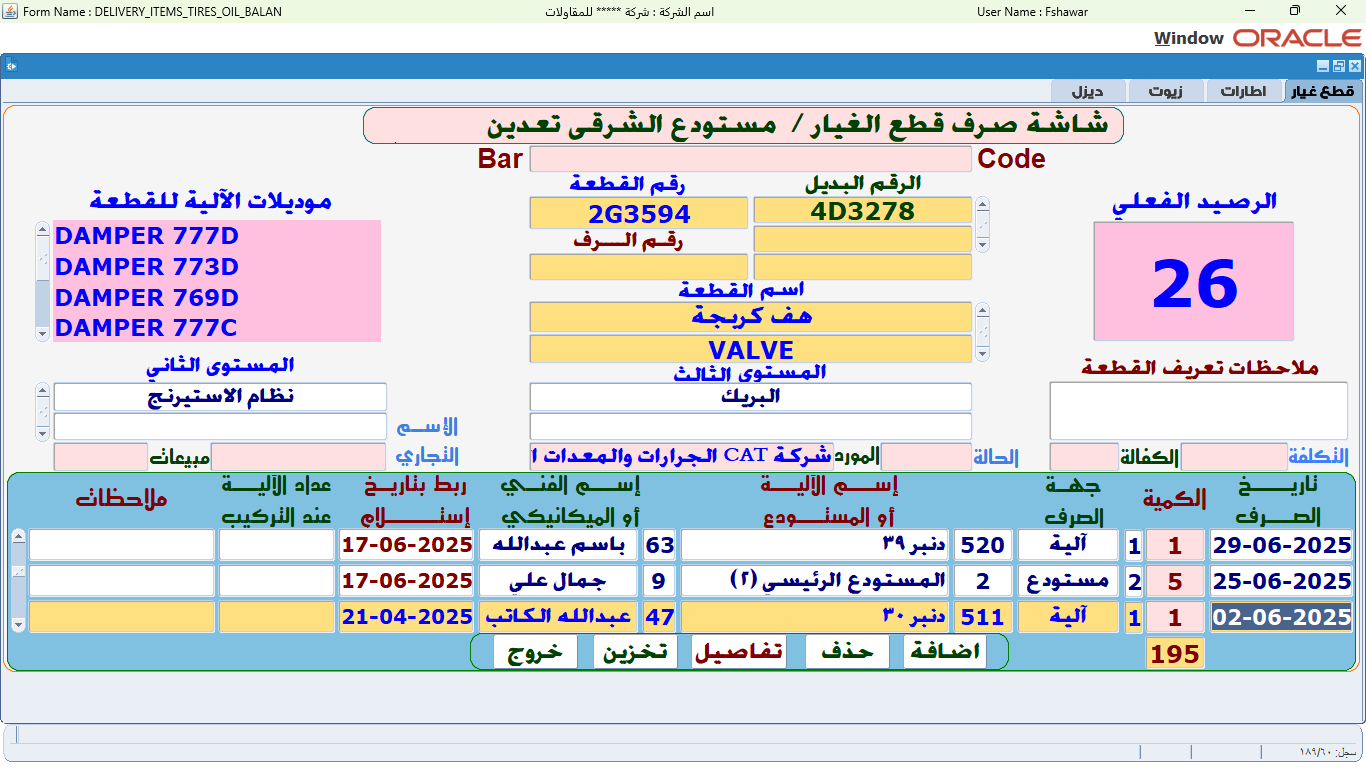
Documentation of the receipt and disbursement of spare parts: the source of the part, its condition, the part disbursed, and the name of the technician receiving it, linked to the reports from the warehouses.
What should be done in this part of the system?
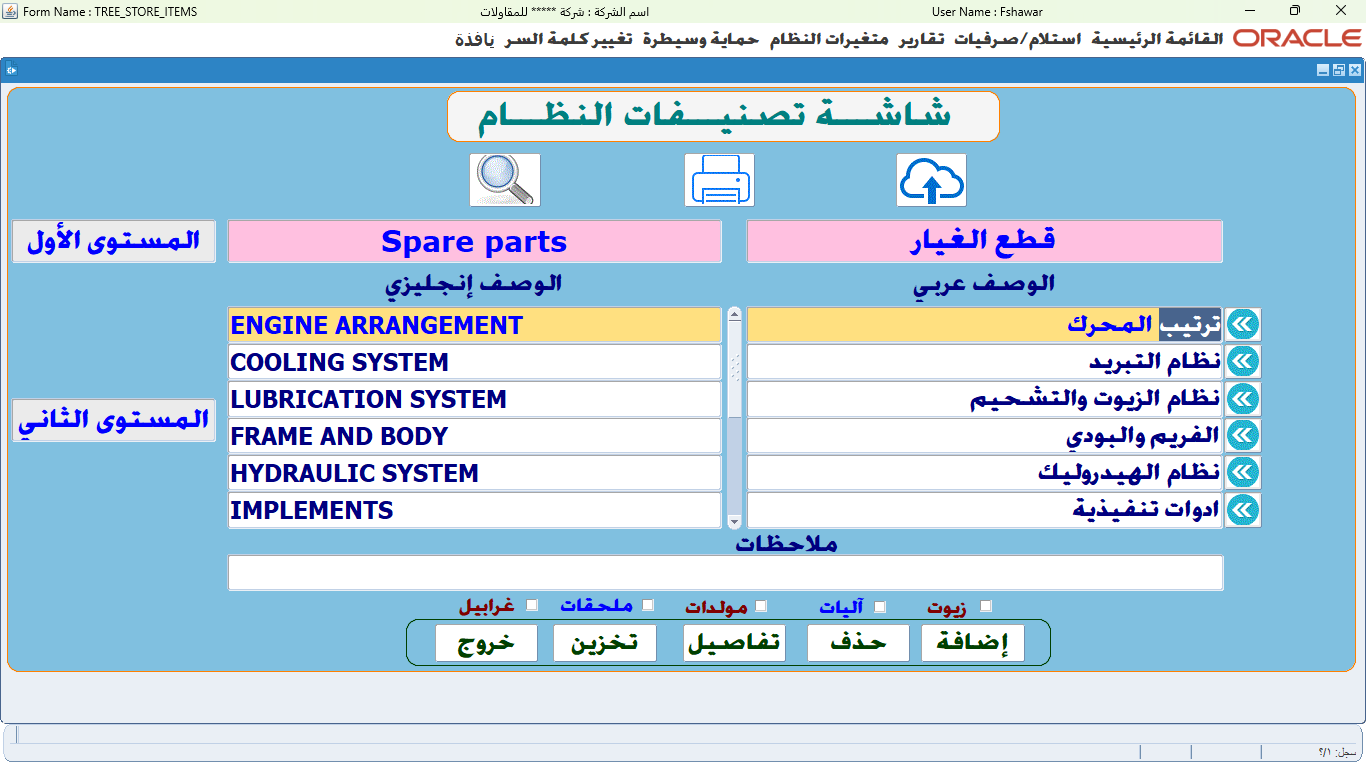
System classification
This screen includes all system classifications; these will be linked later to spare parts and mechanisms.
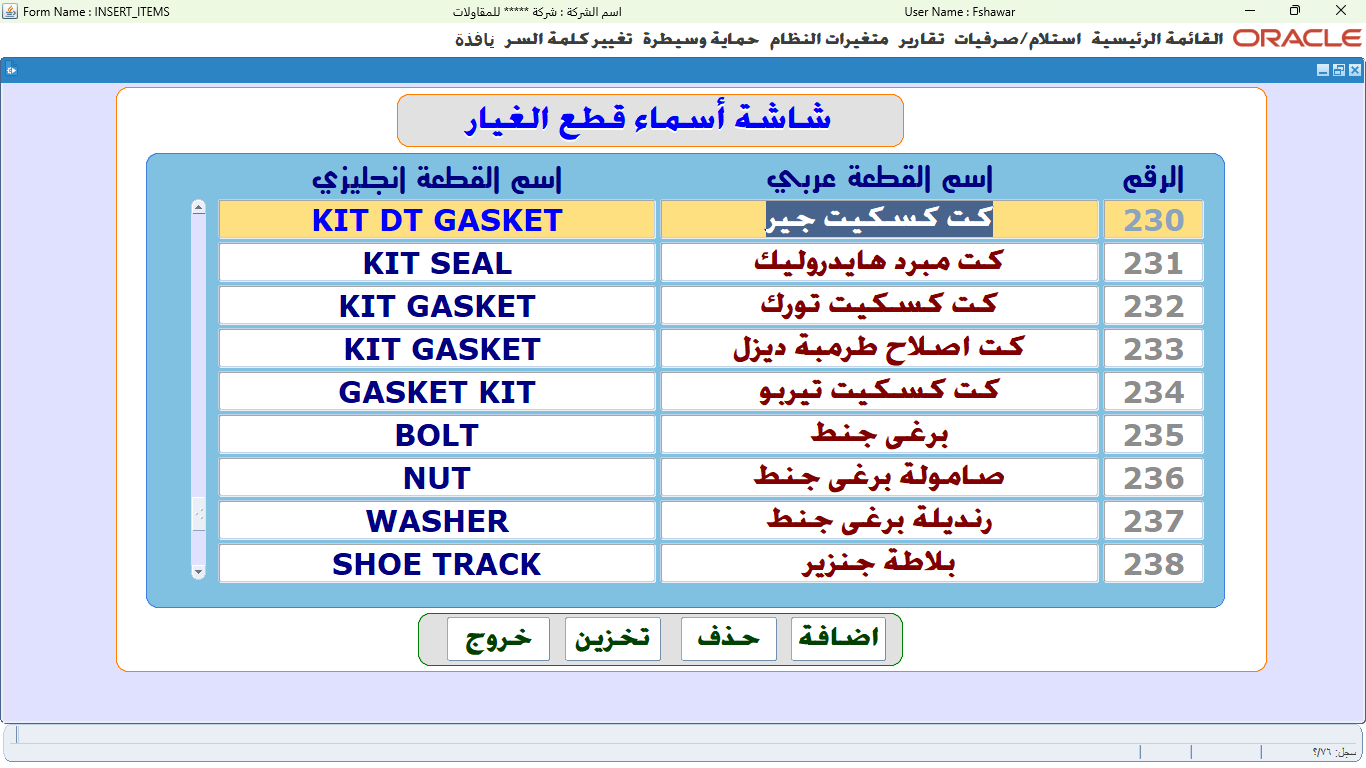
The names of the pieces are Arabic - English
Enter the names of the pieces in Arabic - English
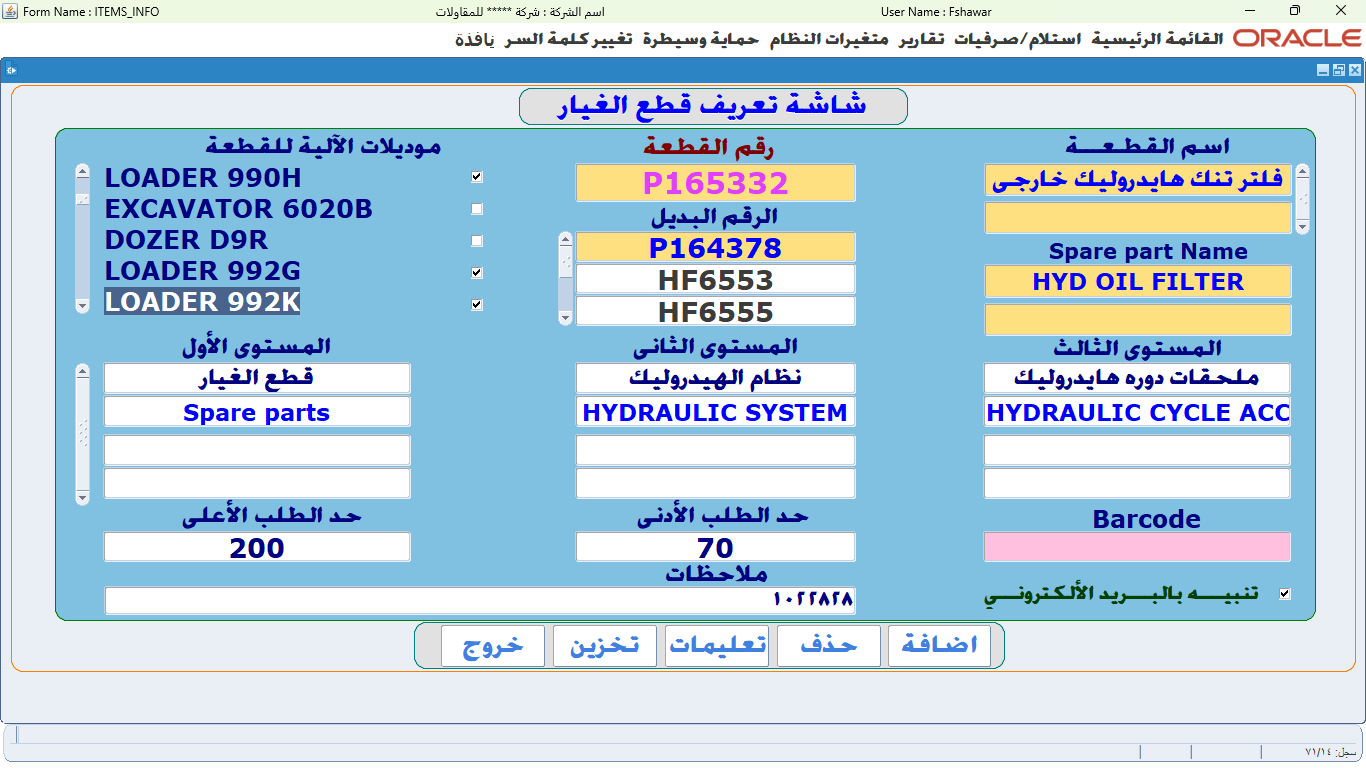
Details of the piece
Enter some details for the piece such as the number and link it to the name and model of the machine it will be used in.
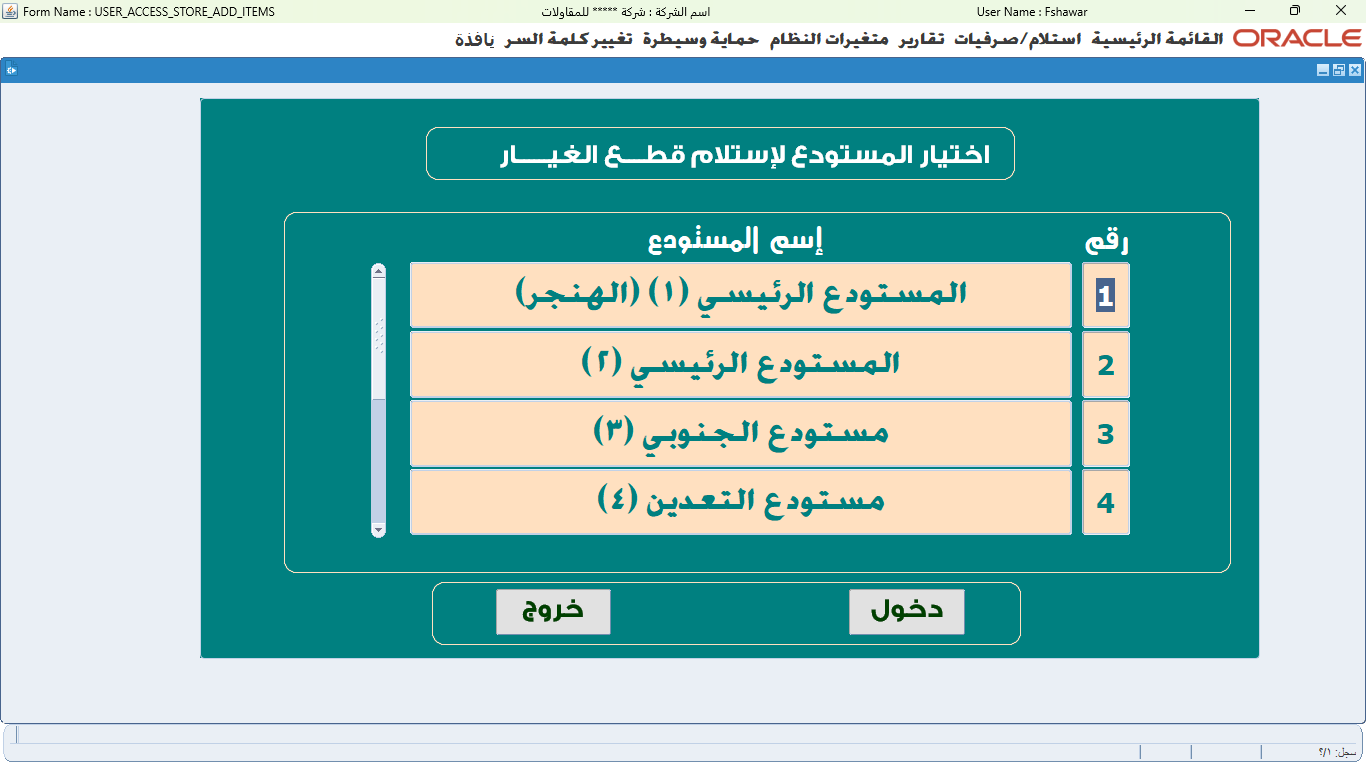
Construction of warehouses
For use in receiving and paying out
Receiving spare parts
Entering some details that we will need later in the accounting or reporting process
Only spare parts
Entering the details of the transaction, debiting to a second mechanism or warehouse
What should be done in this part of the system?
– 02 Tyres
An integrated log for each frame that includes its current location, history of change and maintenance, with flexible policies and clear costs for each
Vehicle.
Every frame is documented
By its location and condition
And its cost
What should be done in this part of the system?
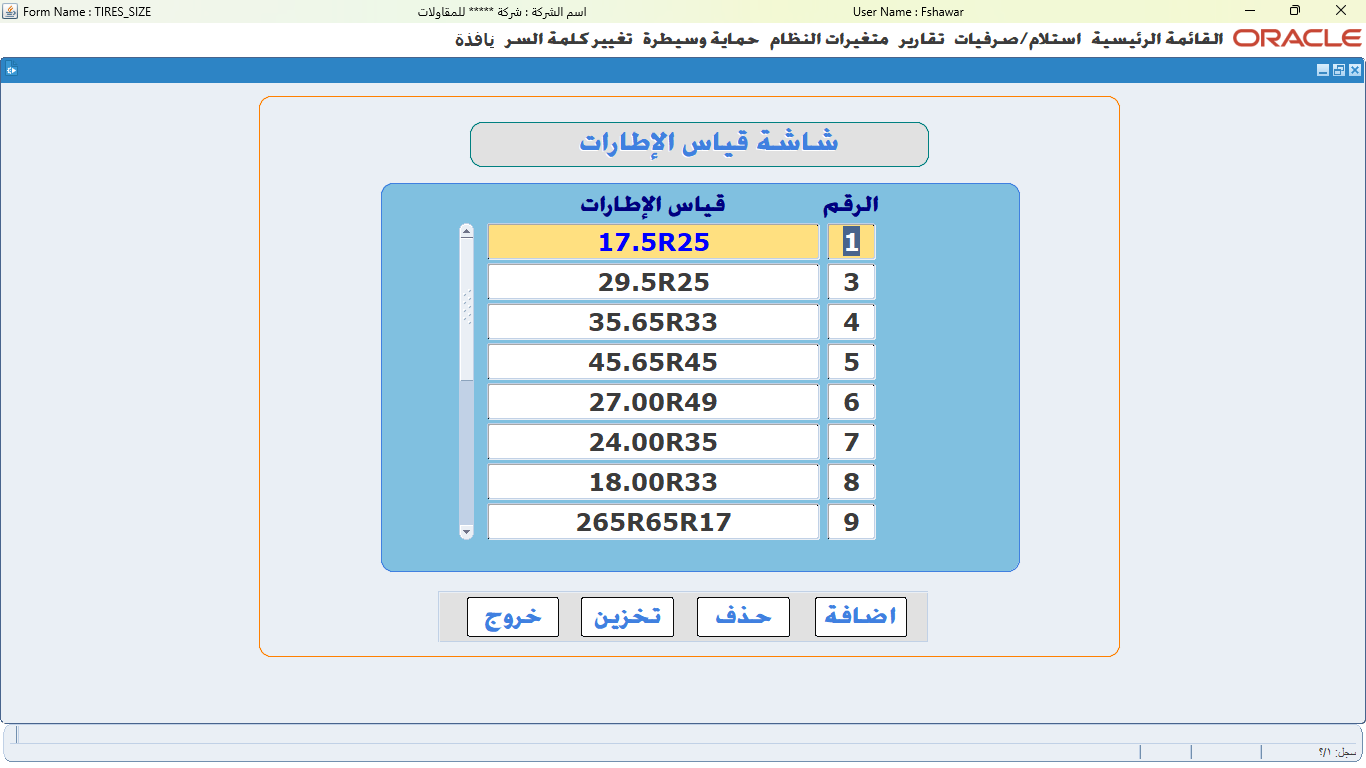
Introduction of some definitions
Introduction of tire measurements that will be used for receiving and dispensing on the vehicles
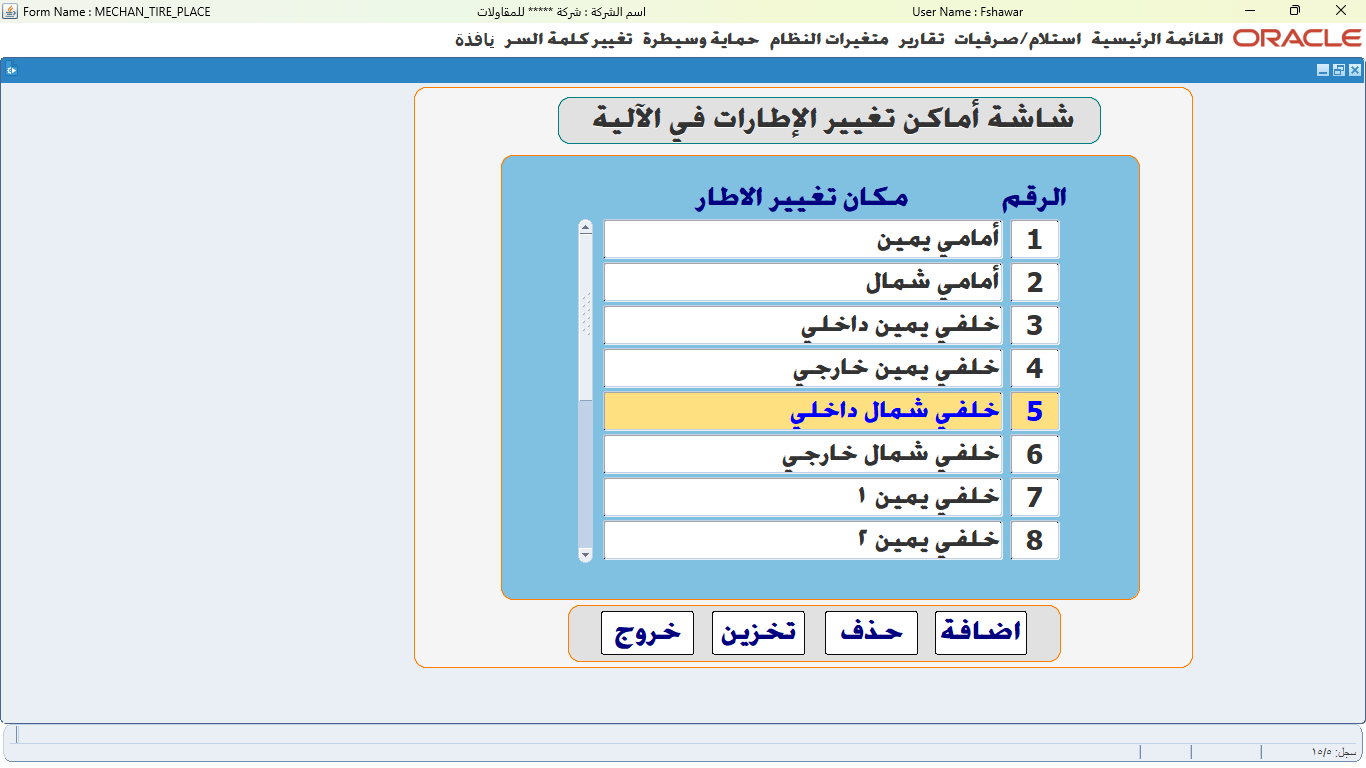
Places for installing tires
Entering all the places where the frame will be mounted in the various mechanisms
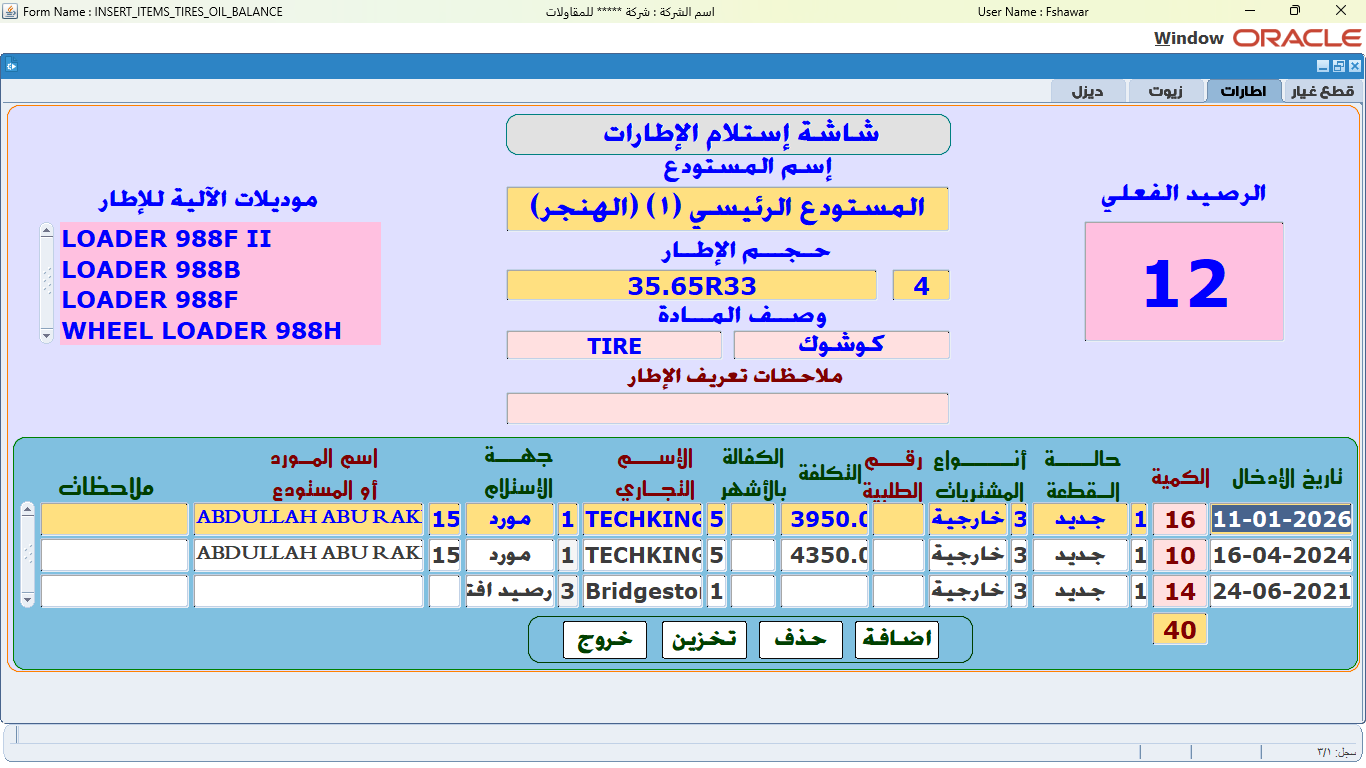
Receiving the tires
Enter the details of the framework, such as the price, the business name
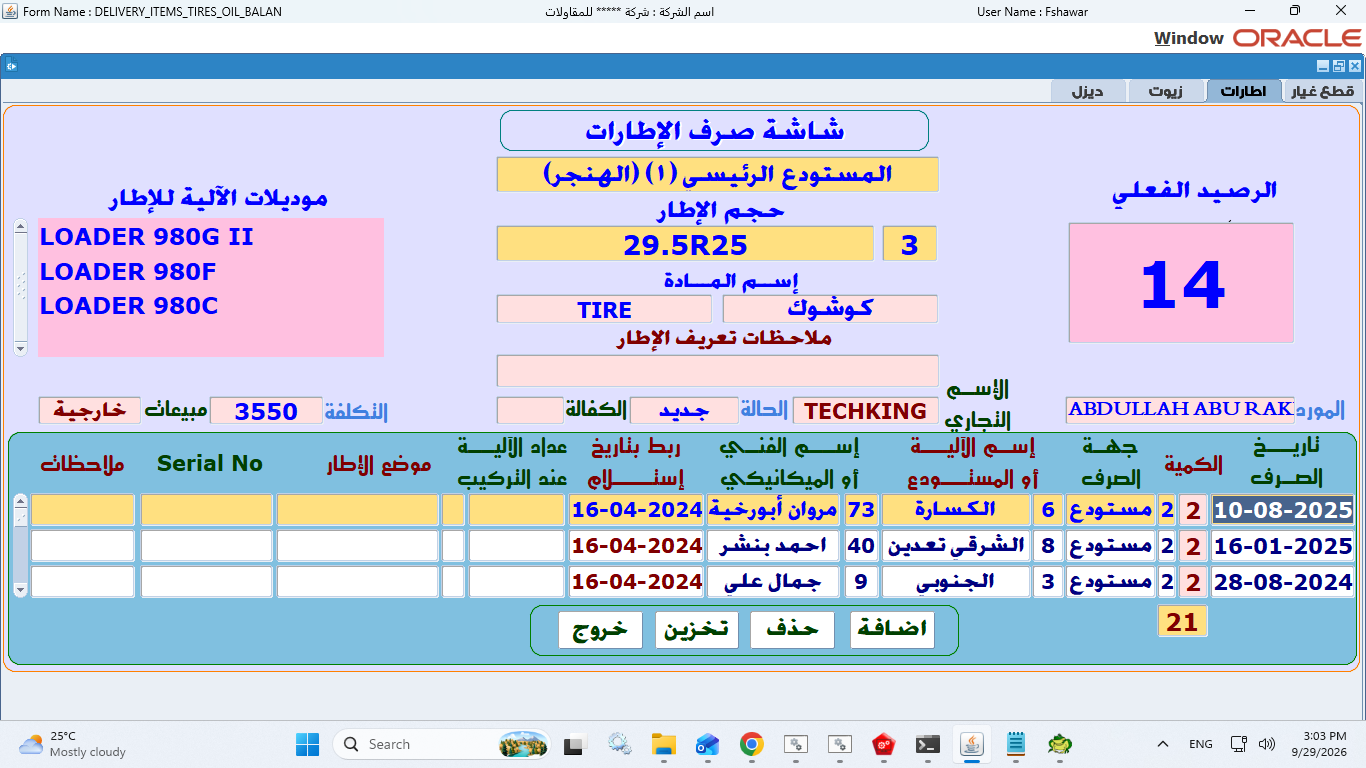
Just the framework
Enter the details of the frame’s installation location and the mechanic responsible for installing it
What should be done in this part of the system?
– 03 Oils
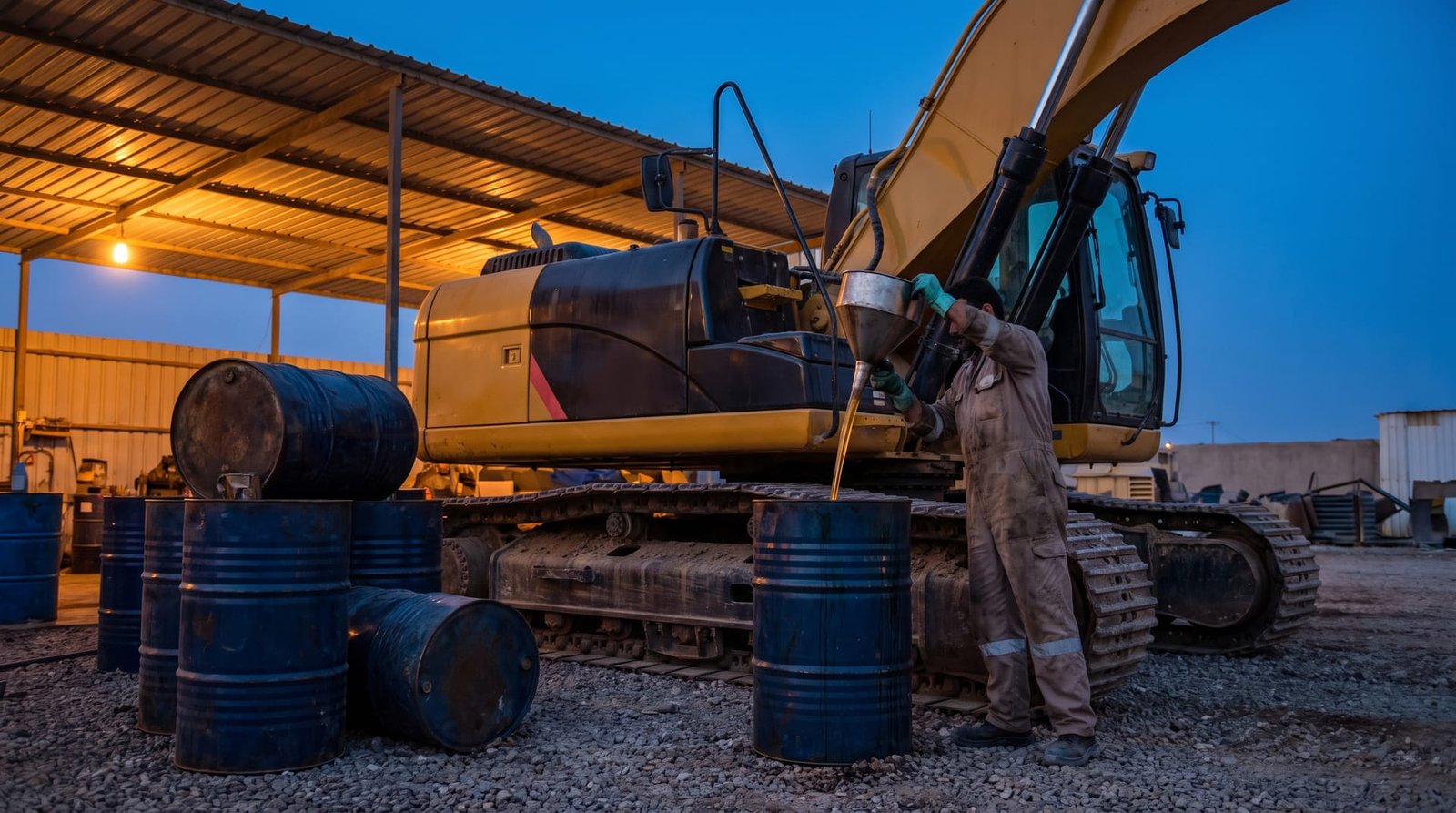
From ordering supplies on site to approving and debiting funds from the warehouse balance, to recording and returning used oil to the inventory, the oil cycle remains clear and manageable.
For tracking.
Every oil has its own unique flavor Documented movement
What should be done in this part of the system?
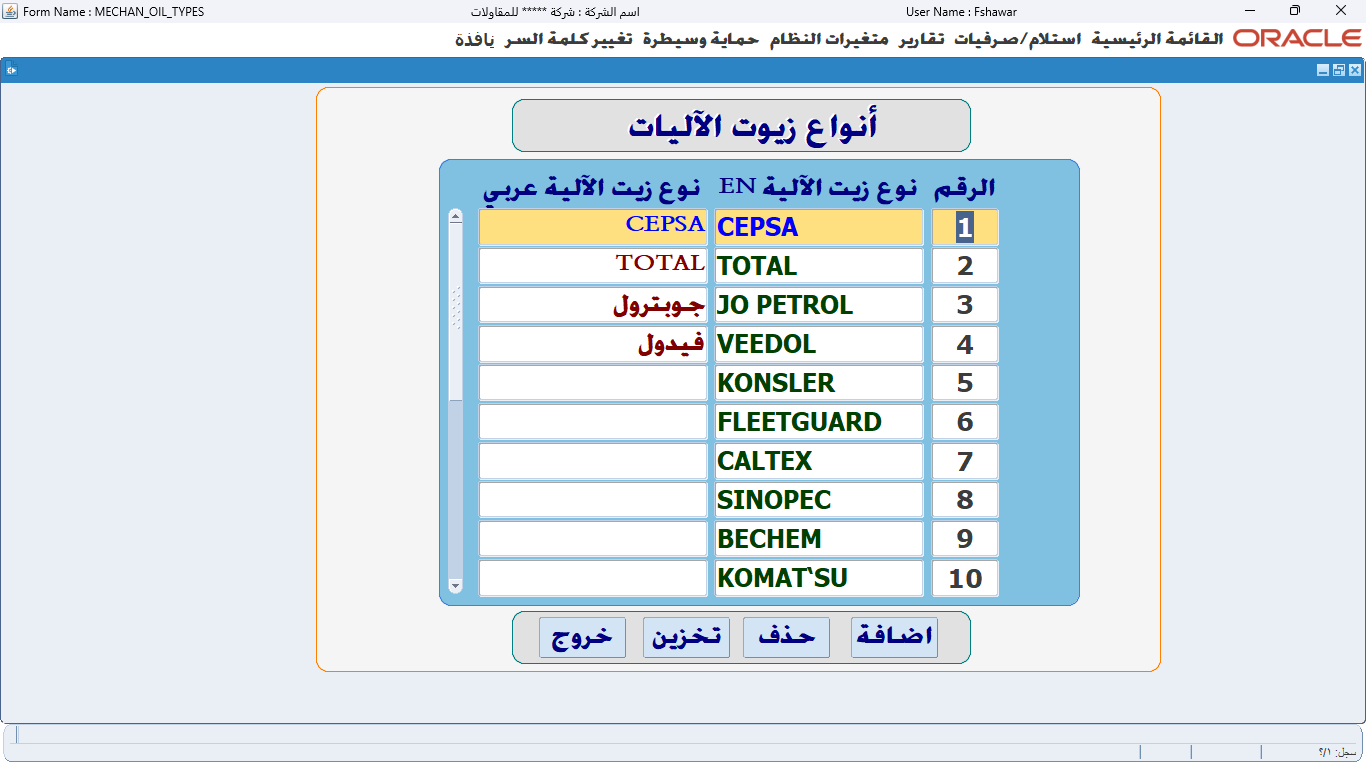
Introduction of some definitions
Introduction of the types of oils used in the system
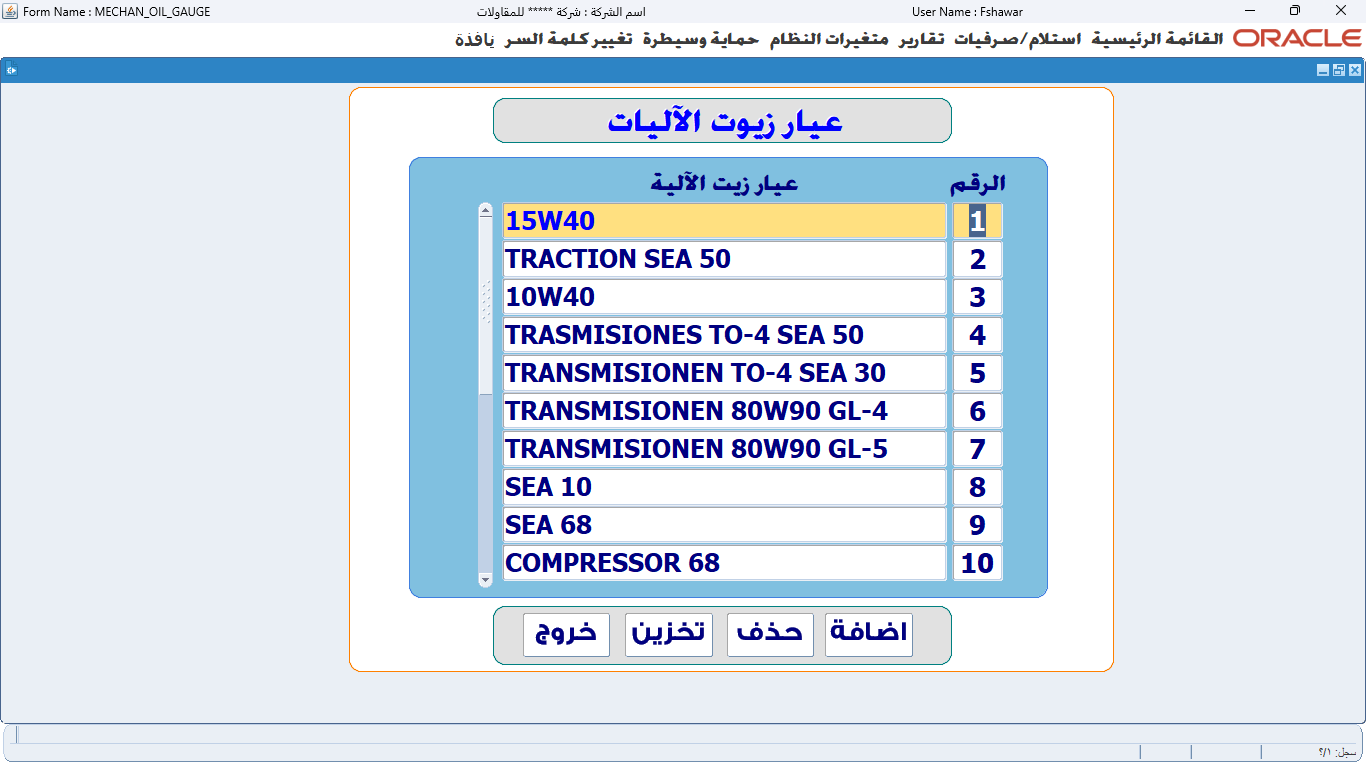
Oil grade
Introducing the oil gauge that will be supplied to the vehicles
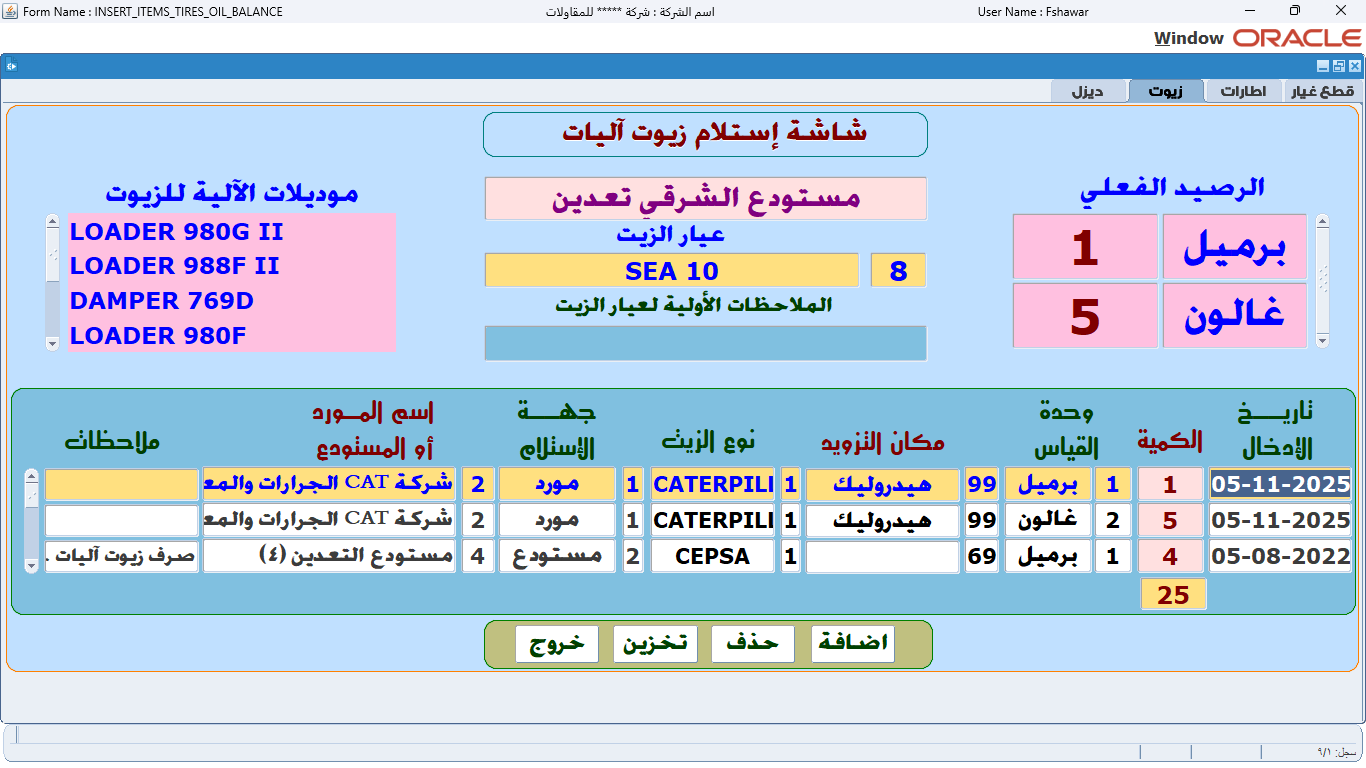
Receiving the oils
Enter the oil details such as the receiving point and the unit of measurement.
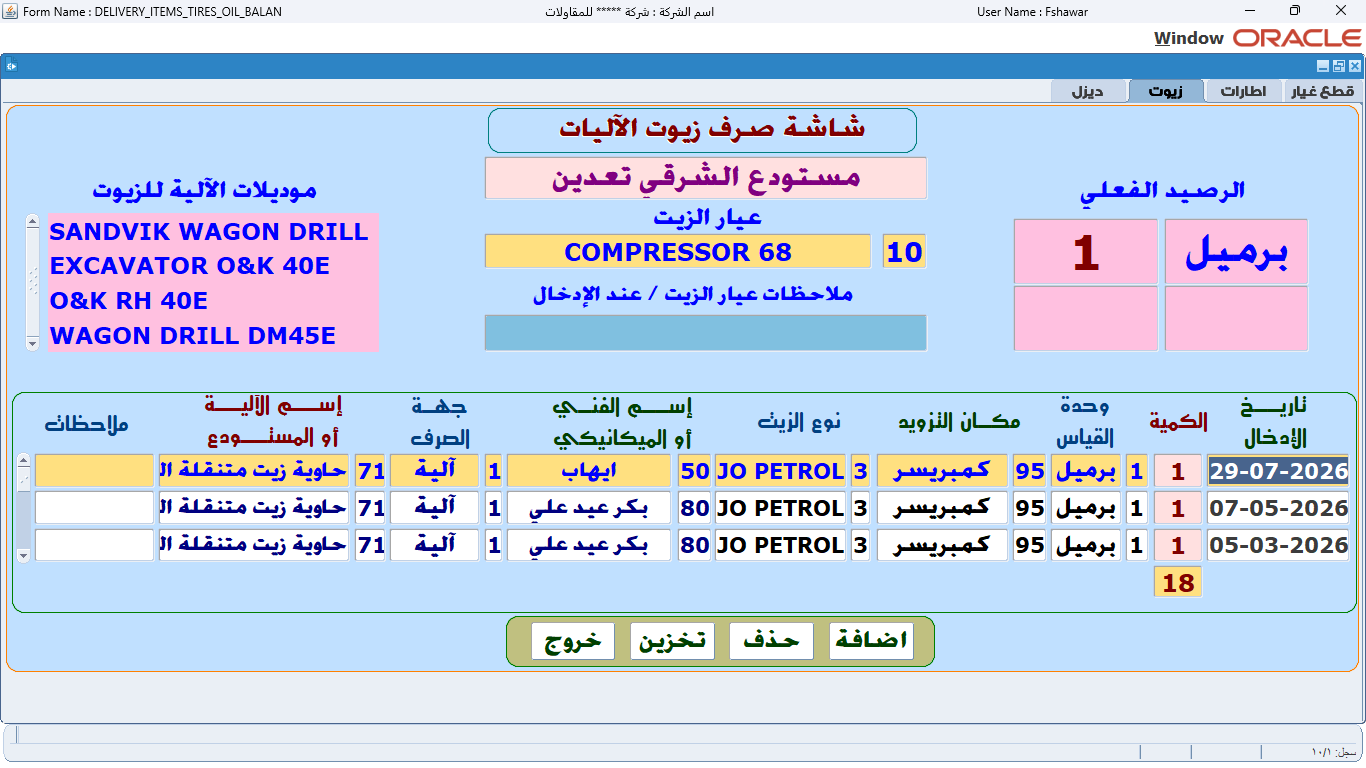
Only oil
Enter the details of the oil disposal, the disposal point, another mechanism or warehouse
What should be done in this part of the system?
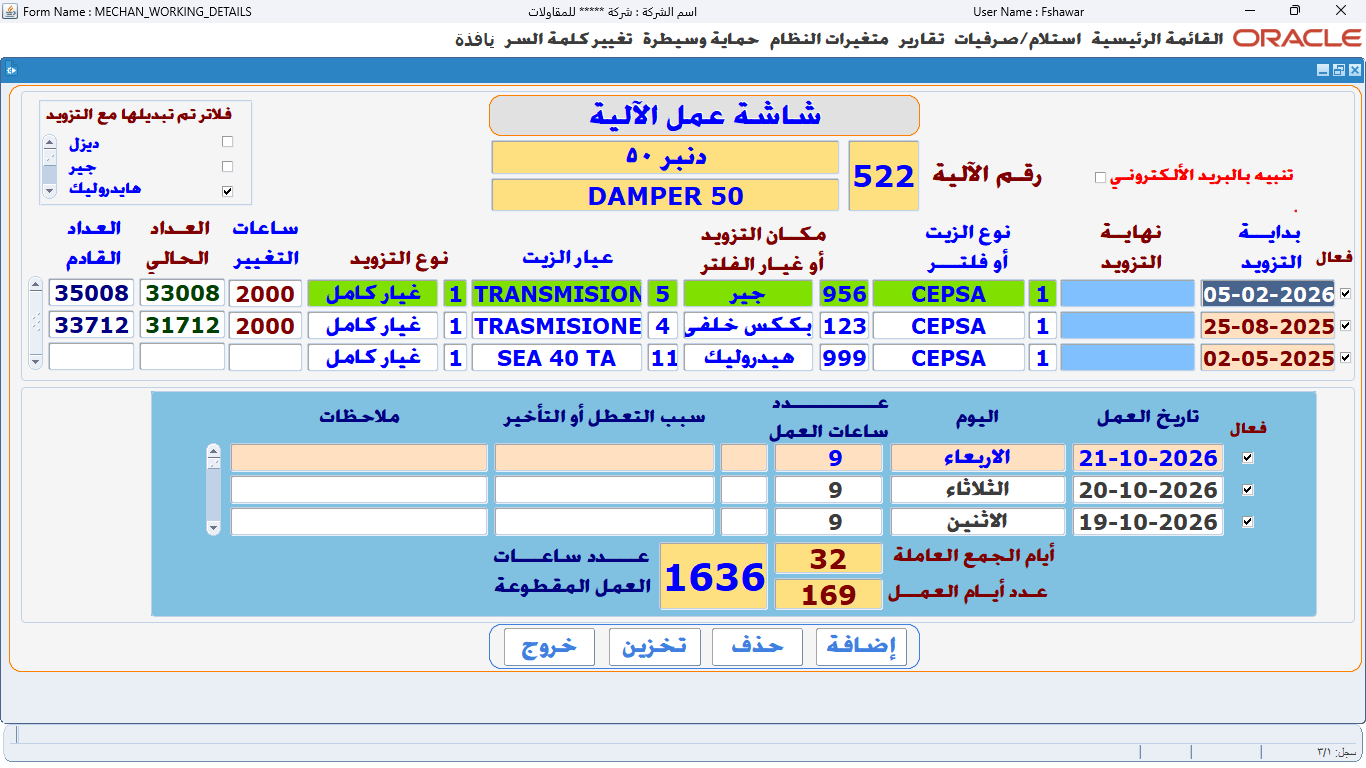
Special screen to monitor oil supply
A dedicated screen to monitor the oil supply for each individual engine, with an email alert sent before the oil change date.
– 04 Diesel
Every diesel supply operation is recorded in detail, from the quantity and source of fuel to the mechanism, the person responsible, and the time of refueling, with the inventory of tanks and containers updated and card movements compared with actual consumption.
Actual control On the move Diesel
What should be done in this part of the system?
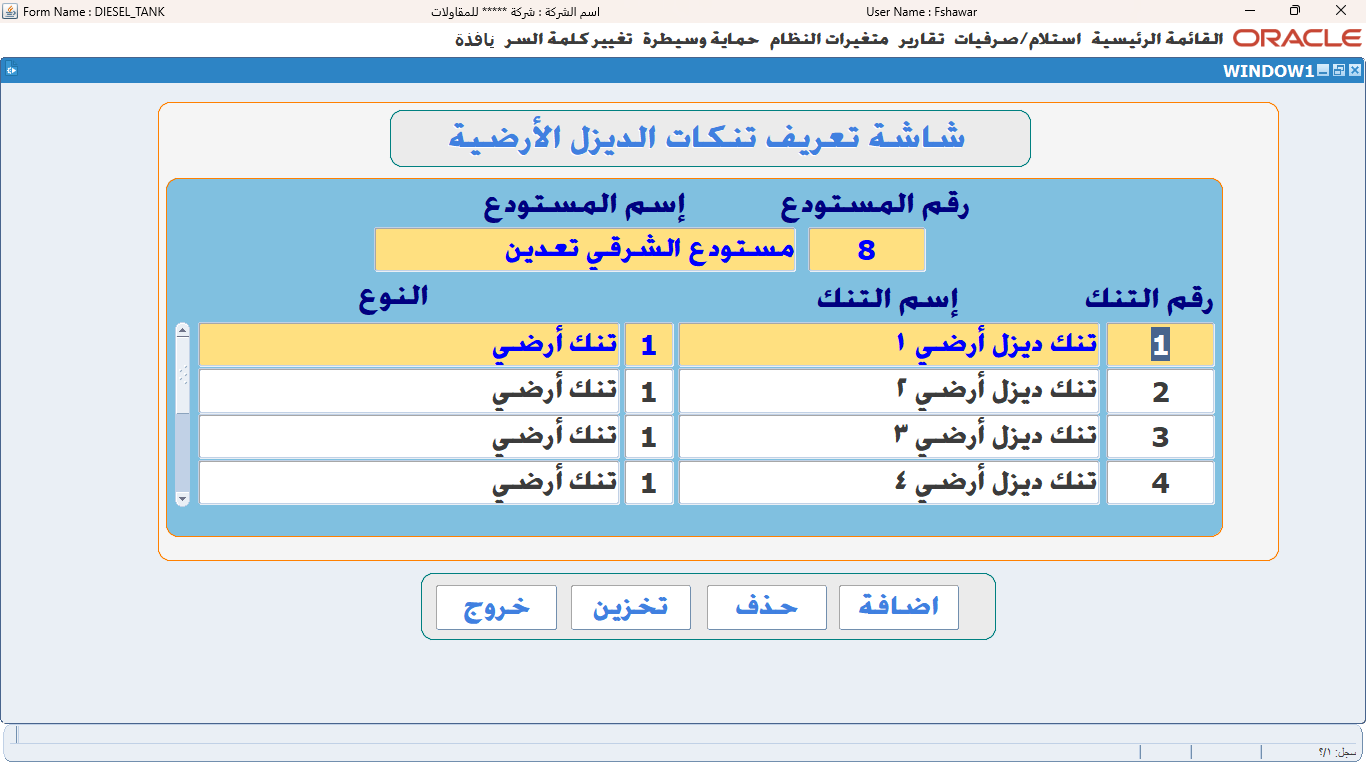
Introducing some changes specific to diesel
Introducing the variables of the ground diesel tanks that will receive and dispense the diesel
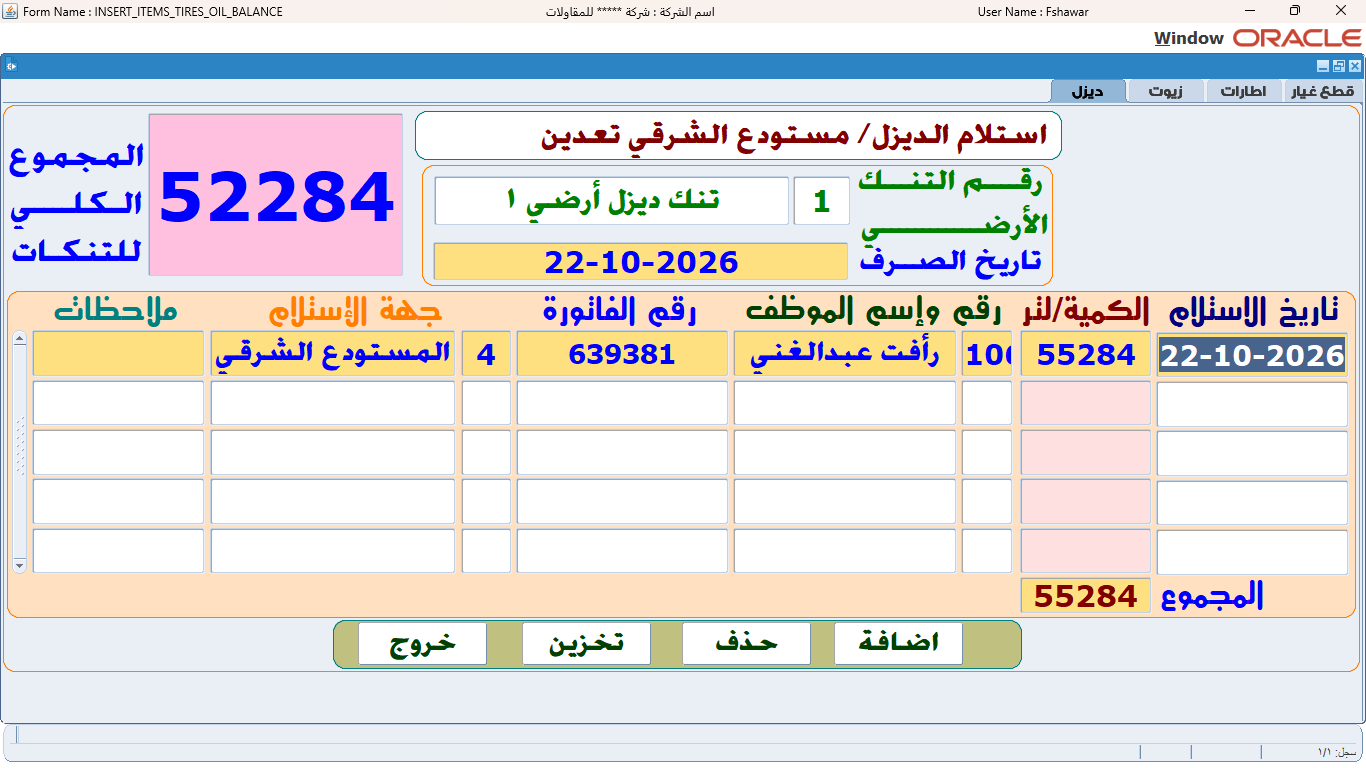
Diesel pickup screen
Details of receipt will be added such as quantity, source of receipt... refinery tanker or another warehouse
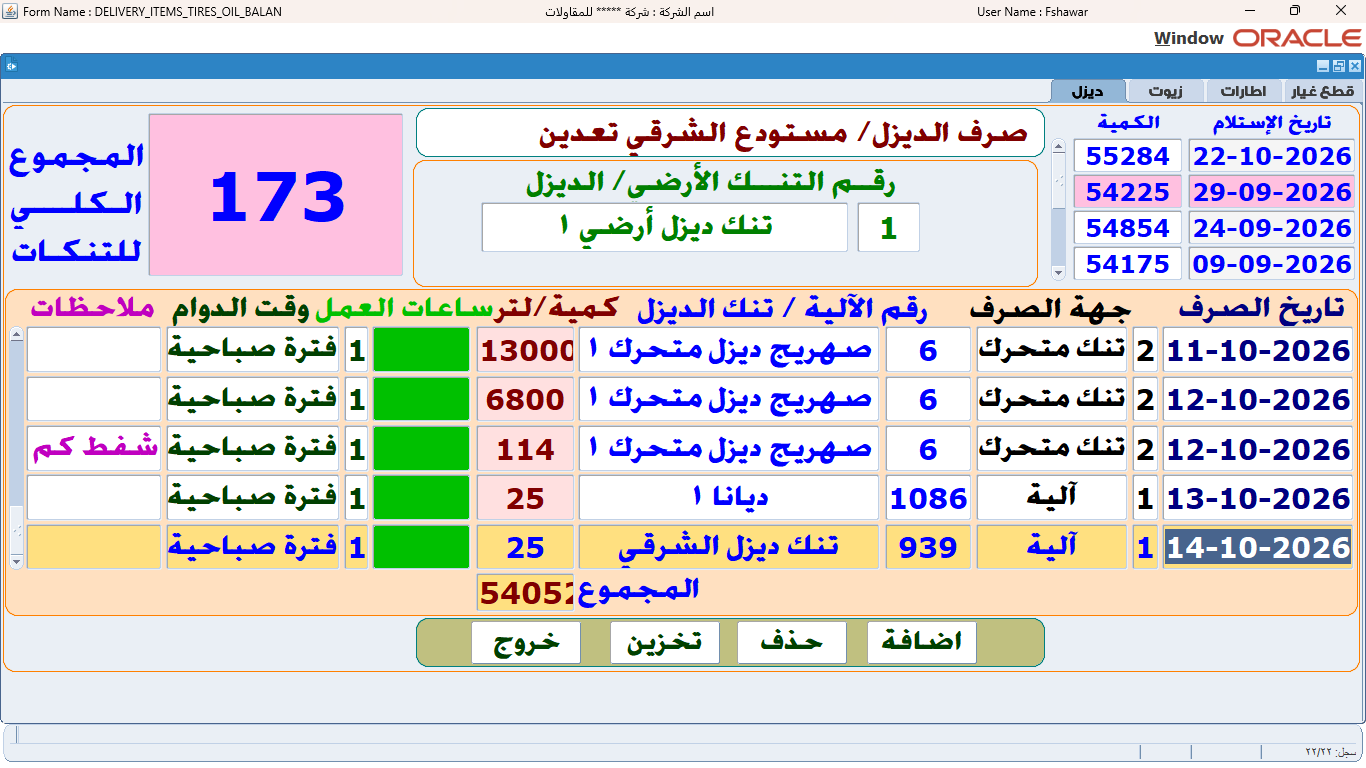
Only diesel
Diesel can be discharged from the ground tank to the discharge point or a mobile tank, which in turn will supply the machinery.
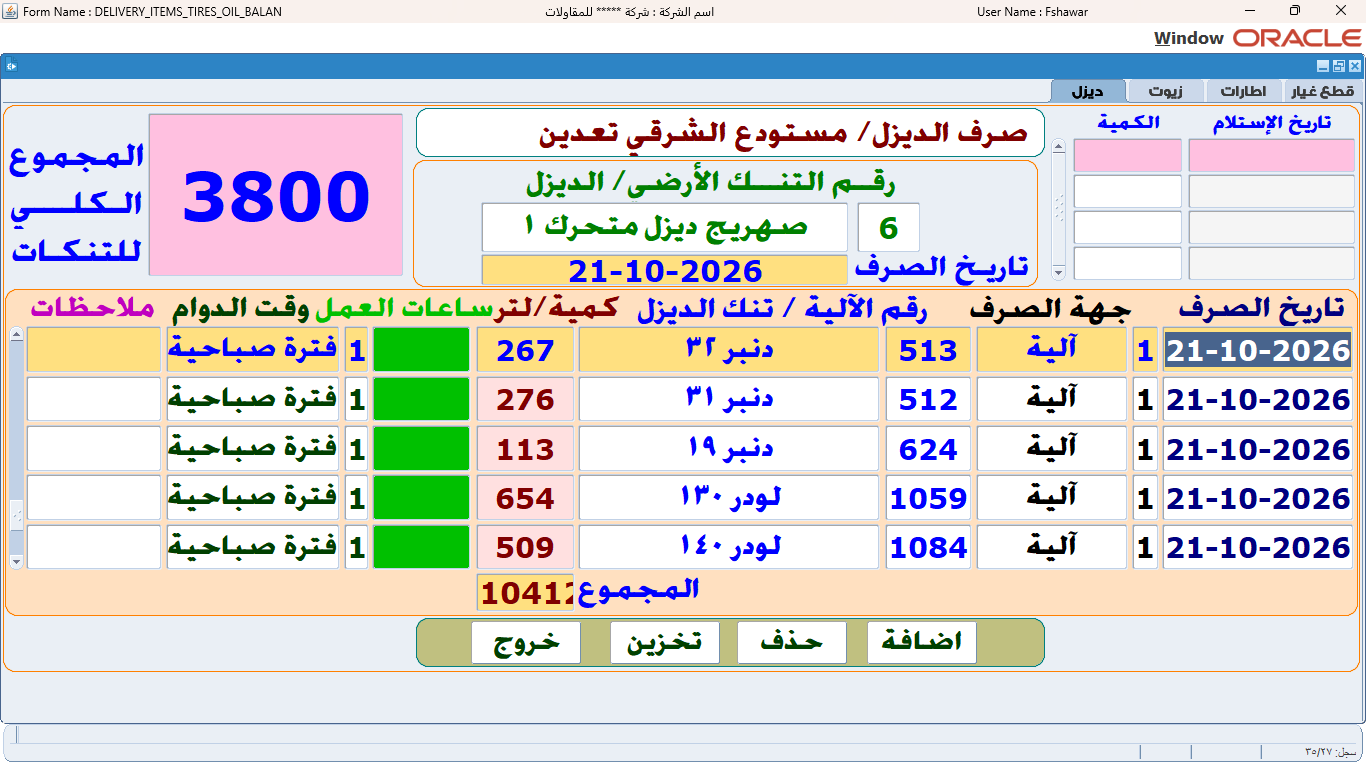
Another example of the use of diesel fuel
This time the transfer will be from the mobile tank.
What should be done in this part of the system?
– 05 Reports
Reports from Same data The ones that are recorded The field
One data set, reliable reports. The reports are built from records of actual operations, with the possibility of comparing projects and periods, and the use of an analytical assistant that provides answers supported by data sources.
Reports Center
Comprehensive and detailed reports on all aspects of the system
– 06 Warnings
Automatic alerts From the statements Approved operation
Precise alerts, based on reliable data. The system monitors operating movements and actual records, and alerts you when maintenance dates approach, documents expire, or consumption and inventory exceedages appear.
Automatic alerts From the statements Approved operation
Precise alerts, based on reliable data. The system monitors operating movements and actual records, and alerts you when maintenance dates approach, documents expire, or consumption and inventory exceedages appear.
Alerts Center
Comprehensive and detailed warnings for all aspects of the system
Targeted groups
Transport and logistics companies
Transport and logistics companies
Concrete and brick factories
Heavy equipment rental companies
Heavy equipment rental companies
Construction companies
Large data sets for an integrated digital platform that unifies operations for heavy equipment and fleets in a single system, connecting the field to the workshop, warehouse, and management, transforming daily movements into reliable data and clear operational visibility that helps tighten control, improve asset efficiency, reduce costs, and make decisions faster and more accurately.